CR-51
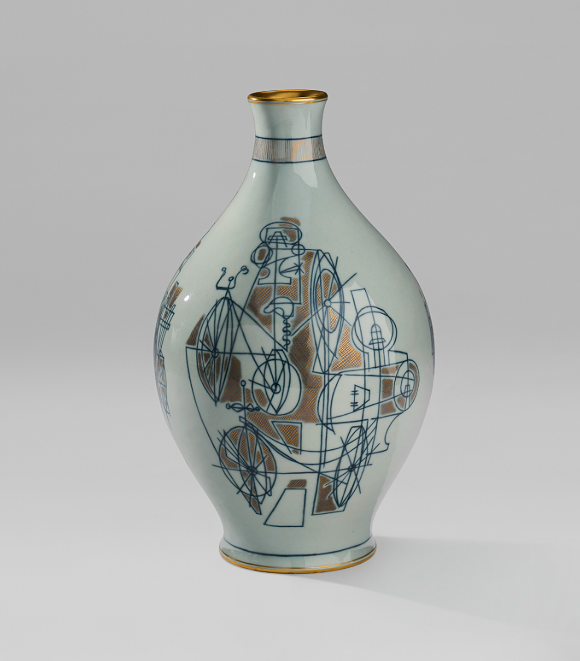
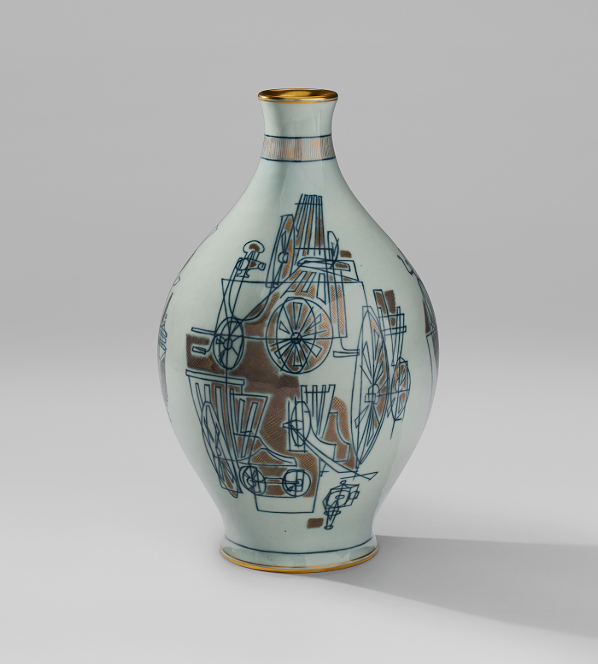
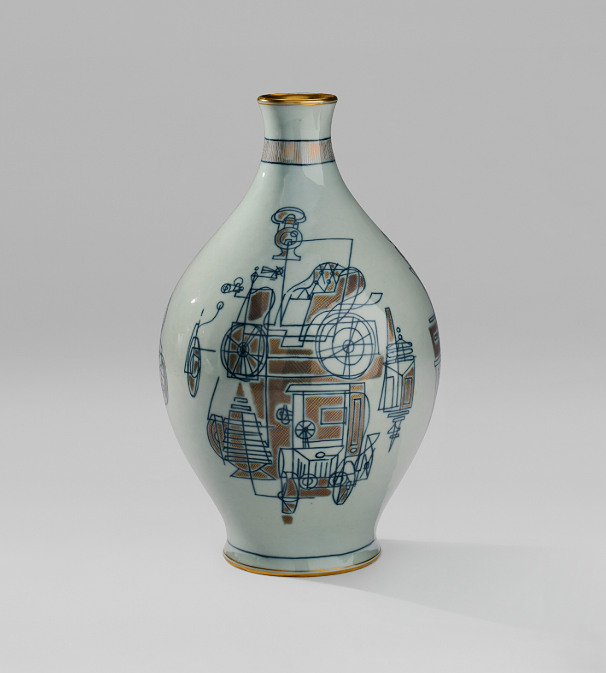
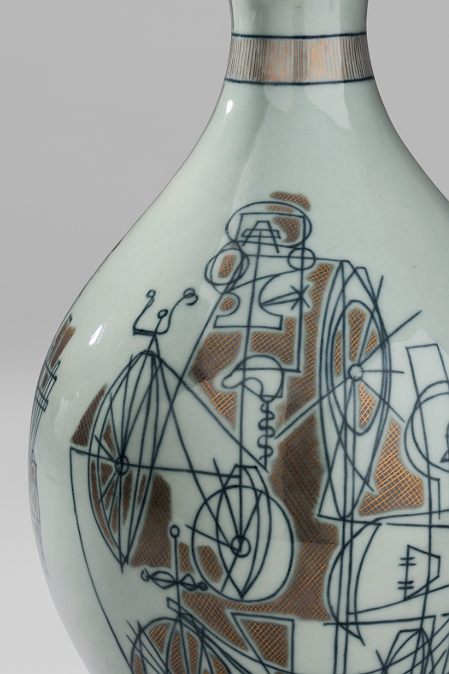
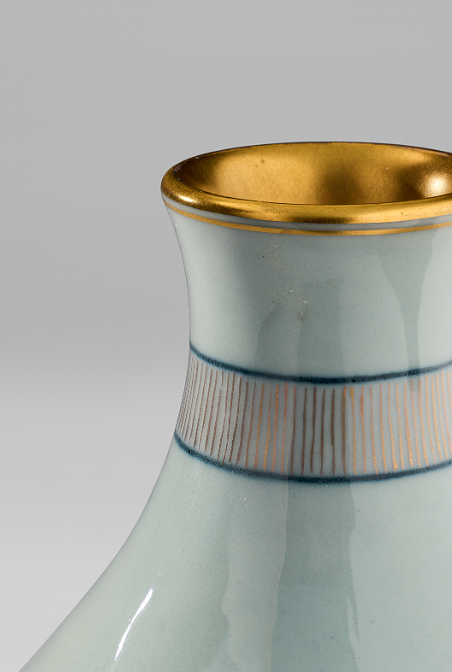
Porcelain "Nerville" Vase by Maurice André for Manufacture Nationale de Sèvres
Porcelain "Nerville" Vase by Maurice André for Manufacture Nationale de Sèvres France: 1953 inscribed FB. d'ap. M.ANDRÉ 26-53 and with manufacturer's marks Provenance Sotheby's, New York, 28 July 2016, lot 25 Acquired from the above by the present owner Literature Sèvres: Porcelain of the 50s, exh. cat., L'Arc en Seine, Paris, no. 28 Maurice André (1914-1985) was a distinguished French visual artist known for his significant contributions to the world of tapestry art. As a founding member of the renowned group "Tapisserie de France" and a member of the A.P.C.T. (Association des Peintres-Cartonniers de Tapisserie), André played a pivotal role in shaping the tapestry art scene of his time. André's artistic style was distinctly personal, diverging from the dominant aesthetic championed by artists like Lurçat. Influenced by cubism, his work was characterized by the use of rigorous, flat areas of color, often employing a limited palette to achieve striking visual effects. His innovative approach caught the attention of both critics and patrons, leading to numerous prestigious commissions, including notable works for the Council of Europe in Strasbourg ("L'Europe unie dans le Travail et la Paix") and the French pavilion at the Brussels Exhibition in 1958 ("La Technique moderne au service de l'Homme"). Over time, André's artistic style underwent a gradual evolution, moving towards greater abstraction, much like his contemporaries Wogensky and Prassinos. His later works embraced a more lyrical and geometric aesthetic, reminiscent of the renowned artist Matégot.
- height
- 10 5/8 in.
- diameter
- 6 1/4 in.